The problem with tracking on-trade activation ROI today
Measuring the ROI of on-trade brand activation is one of the most difficult challenges in drinks marketing. Unlike digital advertising where every click and conversion is tracked automatically, on-trade activation happens in the physical world — across hundreds of pubs, bars, restaurants and venues, managed by field sales teams and agencies, with results buried in wholesale depletions data that arrives (if at all) weeks after the campaign has ended.
Here’s how most brands attempt to track on-trade activation ROI today — and why it consistently falls short:
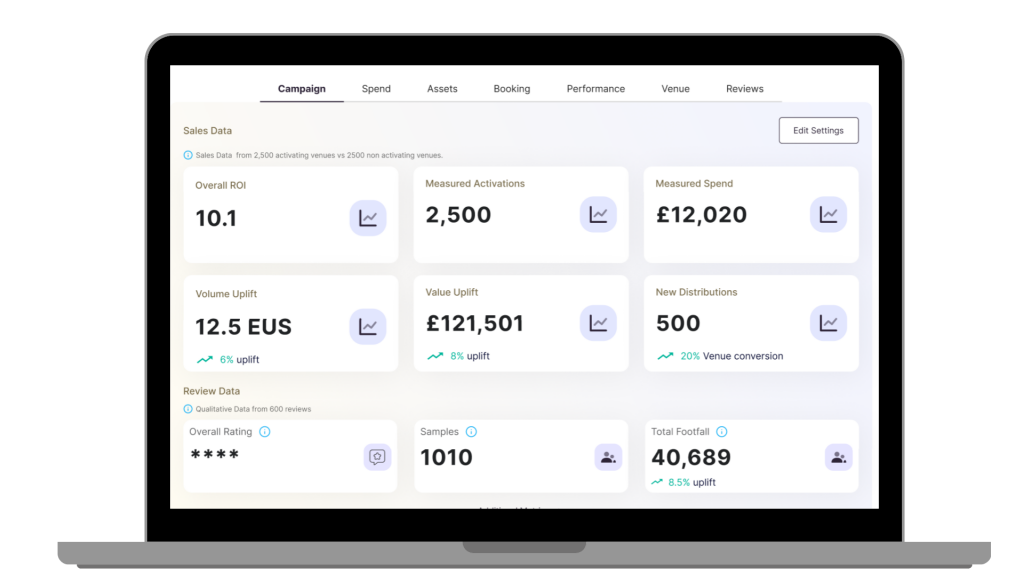
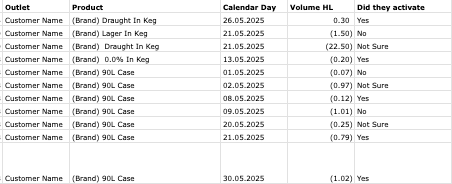
Step 1 — Getting the sales data Brands have to request depletions data from wholesalers or large managed groups — if they have access to it at all. Many don’t. Those that do, receive it weeks after the activation period, making real-time course correction impossible.
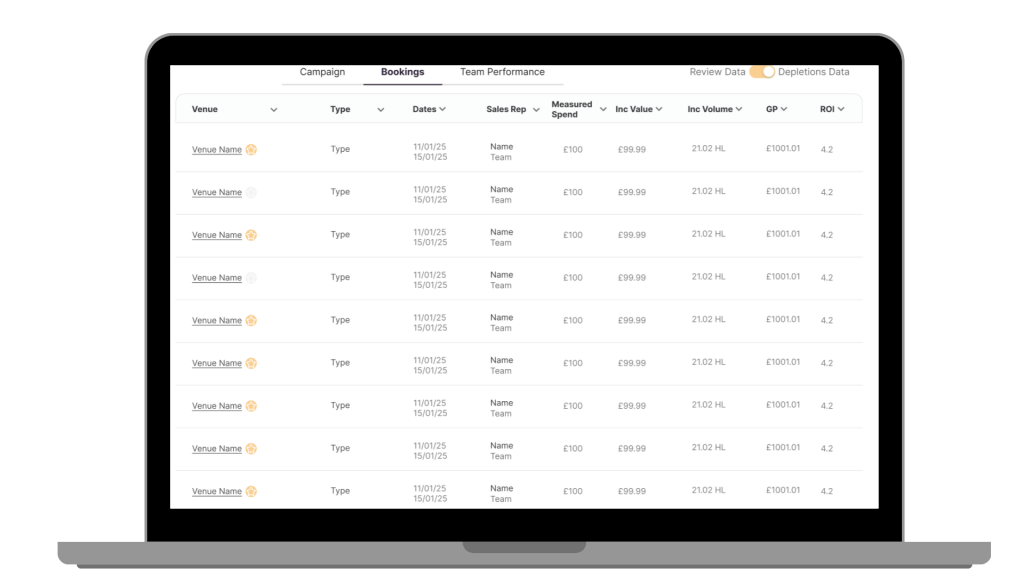
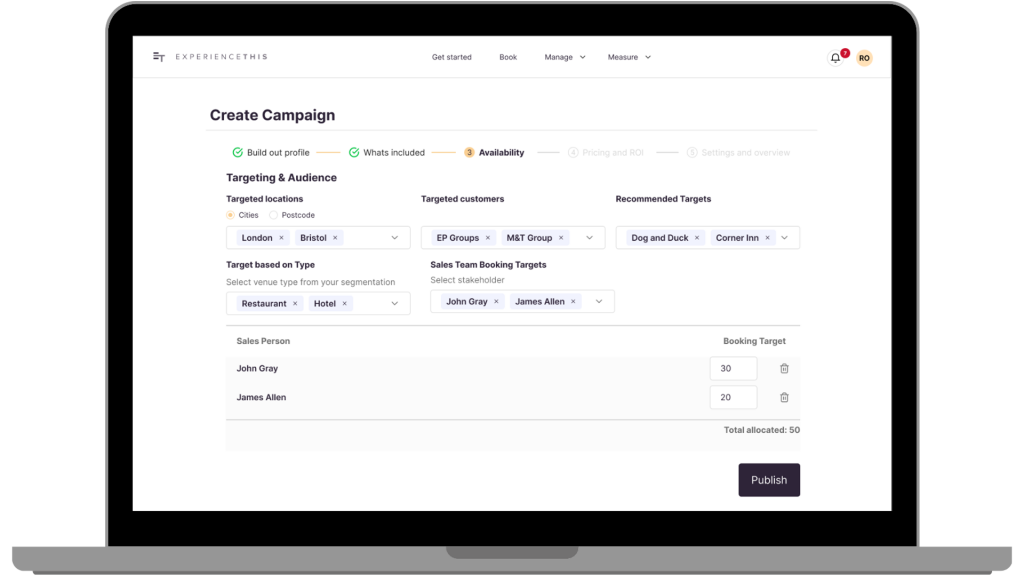
Step 2 — Correlating sales to activation Once they have the data, brands have to manually correlate sales uplift to specific on-trade activations — an enormous task given the fragmentation of most activation programmes. Without a centralised record of exactly which venues were activated, who executed them, and what was deployed in each outlet, this correlation is largely guesswork.
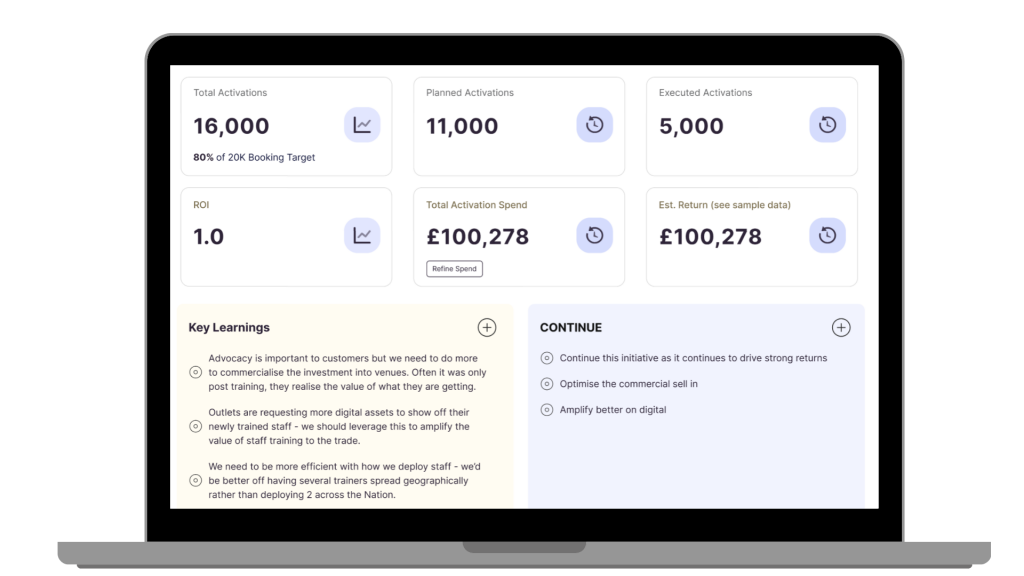
Step 3 — Running the Commercial ROI calculation Most brands use offline ROI calculators — spreadsheets or simple tools where they manually input data points to work out an ROI figure. These typically use macro spend figures rather than individual activation costs, because brands don’t have visibility of cost per outlet or per activation. The result is a rough estimate at best.
Step 4 — Comparing activating vs standard outlets The more sophisticated brands will compare performance in activating on-trade venues vs standard venues, and activating time periods vs standard time periods — to get a more accurate read on true uplift. But doing this manually across hundreds of outlets requires significant analytical resource and time.
Step 5 — Presenting and filing the results Results get compiled into a PowerPoint and presented to brand teams. Then they get filed away — and the learnings get lost. The same mistakes get made again: sending kits to on-trade outlets that rejected them last time, activating in venues where it consistently underperforms, missing the outlet types and territories where it works best. Because that data was never centralised, it was never applied to future campaign settings.
For brands without sales data or on-trade tracking infrastructure at all, the alternative is working with specialist research agencies to model uplift — or simply looking at general market uplift and assuming on-trade activation played a role.